Bookrepoter.com Click Here Click Here Click Here
Home Reviews Features Authors Quote Books Into Movies Book Clubs Awards Coming Soon
Search Contests WOM Bestsellers New in Paperback Newsletter Bibliographies Blog


Interviews

Author Talk

Article

Fast Facts

Author Bibliography

AuthorontheWeb.com Author of the Month
May 2003


Click here to find more Margaret Atwood on Audible.com.

Books by
Margaret Atwood


MORAL DISORDER: And Other Stories

THE TENT

THE PENELOPIAD: The Myth of Penelope and Odysseus

ORYX AND CRAKE

THE BLIND ASSASSIN

Reading Group Guides

THE BLIND ASSASSIN

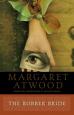
THE ROBBER BRIDE

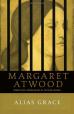
ALIAS GRACE

BODILY HARM

CAT'S EYE

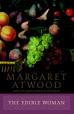
THE EDIBLE WOMAN

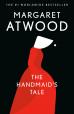
THE HANDMAID'S TALE

LADY ORACLE

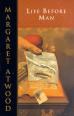
LIFE BEFORE MAN

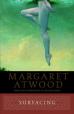
SURFACING

Margaret Atwood

BIO

Margaret Atwood was born in 1939 in Ottawa and grew up in northern Ontario, Quebec, and Toronto. She received her undergraduate degree from Victoria College at the University of Toronto and her master's degree from Radcliffe College.

The daughter of a forest entomologist, Atwood spent a large part of her childhood in the Canadian wilderness. At the age of six she began to write "poems, morality plays, comic books, and an unfinished novel about an ant." At sixteen she found that writing was "suddenly the only thing I wanted to do."

Throughout her writing career, Margaret Atwood has received numerous awards and several honorary degrees. She is the author of more than twenty-five volumes of poetry, nonfiction and fiction, including two children's books, and three volumes of short stories. Her eighth novel, THE ROBBER BRIDE, has her trademark virtuoso wit and trenchant gaze, this time employed on a tale of three women, once classmates at the University of Toronto, and the influence wielded on them by a fourth classmate--the seductive and destructive Zenia.

Ms. Atwood's work has been published in more than twenty countries. She has traveled extensively and has lived in Boston, Vancouver, Montreal, London, Provence, Berlin, and Edinburgh.

Margaret Atwood now lives in Toronto with novelist Graeme Gibson and their daughter Jess.
Back to top.   


FAST FACTS

  • Margaret Eleanor Atwood, poet, novelist and critic was born in Ottawa on November 18, 1939.

  • Atwood is one of Canada's major contemporary authors.

  • She studied at Victoria College, University of Toronto from 1957 to 1961, where the influence of Jay MacPherson directed her early poetry towards myth and archetype.

  • Her poetic reputation was established when The Circle Game (1966) was awarded the Governor Generalís Award.

  • Atwood was involved with nationalist cultural concerns as an editor of House of Anansi Press 1971-73 and as an editor and political cartoonist for This Magazine.

  • This influence emerges in some of her works, such as SURFACING. The Atwood protagonist goes through an archetypal retreat to the wilderness, the irrational, before reintegrating into society.

  • In 1980 Atwood became vice-chairman of the WRITERS' UNION OF CANADA.

  • She worked on a TV drama, Snowbird (CBC, 1981), and published another children's book, ANNA'S PET (1980).

  • Her eminence as a prose writer was confirmed in her co-editing The Oxford Book of Canadian Short Stories in English (1986).

  • Her international readership has been swollen by audiences and students of her many readings, creative writing and Canadian studies courses in such varied places as the universities of Alabama, New York and Berlin.

  • She lives with writer Graeme Gibson.  They have, "altogether," three children and a cat.

  • Ms. Atwood has received 60 Awards for her writing and 14 honorary degrees.

Back to top.   


ARTICLE

Born in Ottowa in 1939, Margaret Atwood grew up as the daughter of a forest entomologist, spending a great part of her childhood in the Canadian wilderness. At the age of six, she says, she began writing "poems, morality plays, comic books and an unfinished novel about an ant." Clearly, her childhood love of writing has continued to this day.

There is something really remarkable about Margaret Atwood, at her unabashed cerebral longings and the tug-of-war this side of her plays with her spiritual, "goddess" side. Like some kind of feral Doris Lessing, she uses the power of her words to open discussions about the core issues of contemporary womanhood for people from all walks of life. That is a rare (and, in her case, well-rewarded) quality.

Atwood's 30 volumes of poetry, essays and fiction include feminist novels such as SURFACING, THE EDIBLE WOMAN, THE HANDMAID'S TALE, THE ROBBER BRIDE, CAT'S EYE and her most recent, ALIAS GRACE (1996). Published in more than 25 countries, Atwood held the presidency of the Writer's Union of Canada in 1981 and was the President of International P.E.N. Canadian Centre from 1984-1986. A lifelong academic, she has lectured at the University of British Columbia in Vancouver, taught English at Sir George Williams University in Montreal and served as a chair in the writing departments at the University of Alabama, New York University, Macquarie University in Australia and Trinity University in San Antonio, Texas.

Coming of age during the feminist revolution of the 1970s, Atwood echoes the sentiments of women's rights in all of her books, asking tough questions about where we're going and where we've been. Atwood never shies away from hard-hitting political statements like unfettered, unguided nationalism, the penchant for violence in the Americas and antiabortion demonstrators in her work. She serves as a constant and strident voice in the ongoing political and social movements of the day, speaking out against anything that doesn't push society towards tolerance and understanding.

Margaret Atwood's singular voice shows no signs of dropping off the meter, and that's a good thing for readers everywhere, male, female, poor and rich, regardless of race, creed or color. With age, she just gets better. We probably haven't seen her best work yet.

   --- Jana Siciliano

Back to top.   


AUTHOR TALK

Margaret Atwood has written more than thirty books of fiction, poetry and critical essays. Her latest novel is the stunning and provocative ORYX AND CRAKE. In this interview Atwood talks about her decision to include a male protagonist in ORYX AND CRAKE, her own spiritual philosophy and the application of humor in the novel's serious premise.
Q: Most of your previous novels have female protagonists. Was it a conscious decision to have a male protagonist for ORYX AND CRAKE, or did Snowman simply present himself to you?

MA: Snowman did present himself to me, yes, dirty bedsheet and all. For this novel, a woman would have been less possible. Or let's say that the story would have been quite different. If we are writers, we all have multiple selves. Also, I've known a lot of male people in my life, so I had a lot to draw on.

Q: When THE HANDMAID'S TALE was published, Contemporary Authors listed your religion as "Pessimistic Pantheist," which you defined as the belief that "God is everywhere, but losing." Is this still an accurate description of your spiritual philosophy?

MA: I expect you don't have the foggiest what I meant in the first place. On bad days, neither do I. But let's argue it through.

Biblical version, see Genesis: God created the heaven and the earth --- out of nothing, we presume. Or else: out of God, since there was nothing else around that God could use as substance.

Big Bang theory: says much the same, without using the word "God." That is: once there was nothing, or else "a singularity." Then Poof. Big Bang. Result: the universe.

So since the universe can't be made of anything else, it must be made of singularity-stuff, or God-stuff --- whatever term you wish to employ. Whether this God-stuff was a thought form such as a series of mathematical formulae, an energy form, or some sort of extremely condensed cosmic plasma, is open to discussion.

Therefore everything has "God" in it.

The forms of "God", both inorganic and organic, have since multiplied exceedingly. You might say that each new combination of atoms, molecules, amino acids, and DNA is a different expression of "God." Therefore each time we terminate a species, "God" becomes more limited.

The human race is terminating species at an alarming rate. It is thereby diminishing God, or the expressions of God.

If I were the Biblical God I would be very annoyed. He made the thing and saw that it was good. And now people are scribbling all over the artwork.

It is noteworthy that the covenant made by God after the flood was not just with Noah, but with every living thing. I assume that the "God's Gardeners" organization in ORYX AND CRAKE used this kind of insight as a cornerstone of their theology.

Is that any clearer?

Q: You grew up among biologists; the "boys at the lab" mentioned in the novel's acknowledgements are the grad students and post-docs who worked with your father at his forest-insect research station on northern Quebec. Does being a novelist make you an anomaly in your family? Is writing fiction much different from doing science?

MA: My brother and I were both good at science, and we were both good at English literature. Either one of us could have gone either way. My father was a great reader, of fiction, poetry, history --- a lot of biologists are. It is of course a "life science." So I wouldn't say I was an anomaly in the family. We all did both. We were omnivores. (I read then --- and still read --- everything, including cereal packages. No factoid too trivial!)

The family itself was an anomaly, but that's another story. I do have an aunt who writes children's stories. I was not exactly isolated and misunderstood. I was probably egged on, at least by some. I don't think they were expecting the results, but then, neither was I.

Science and fiction both begin with similar questions: What if? Why? How does it all work? But they focus on different areas of life on earth. The experiments of science should be replicable, and those of literature should not be (why write the same book twice)?

Please don't make the mistake of thinking that ORYX AND CRAKE is anti-science. Science is a way of knowing, and a tool. Like all ways of knowing and tools, it can be turned to bad uses. And it can be bought and sold, and it often is. But it is not in itself bad. Like electricity, it's neutral.

The driving force in the world today is the human heart --- that is, human emotions. (Yeats, Blake - every poet, come to think of it --- has always told us that.) Our tools have become very powerful. Hate, not bombs, destroys cities. Desire, not bricks, rebuilds them. Do we as a species have the emotional maturity and the wisdom to use our powerful tools well? Hands up, all who think the answer is Yes. Thank you, sir. Would you like to buy a gold brick?

Q: You've mentioned the fact that while you were writing about fictional catastrophes in ORYX AND CRAKE, a real one occurred on September 11. Did that experience cause you to change the storyline in any way?

MA: No, I didn't change the plot. I was too far along for that. But I almost abandoned the book. Real life was getting creepily too close to my inventions --- not so much the Twin Towers as the anthrax scare. That turned out to be limited in extent, but only because of the limitations of the agent used.

It's an old plot, of course --- poisoning the wells. As for blowing things up, the Anarchists were at it for fifty years in the later 19th and earlier 20th centuries. Joseph Conrad has a novel about it (THE SECRET AGENT). So does Michael Ondaatje (IN THE SKIN OF A LION). And the Resistance in World War Two devoted itself to such things. The main object of these kinds of actions is to sow panic and dismay.

Q: Though the book's premise is serious, you included many wordplays and moments of deadpan humour. Was this difficult to achieve, or did it arrive naturally during the storytelling process?

MA: My relatives are all from Nova Scotia. That's sort of like being from Maine. The deadpan humour, the scepticism about human motives, and the tendency to tell straight-faced lies for fun, to see if you can get the listener to believe them.

The French have an expression: "Anglo-Saxon humour." It isn't the same as wit. It's dark; it's when something is funny and awful at the same time. "Gallows humour" is called that partly because highwaymen about to be hanged were much admired if they could crack a joke in the face of death.

When things are really dismal, you can laugh or you can cave in completely. Jimmy tries to laugh, though some of the time he's pretty out of control, as most of us would be in his position. But if you can laugh, you're still alive. You haven't given up yet.

© Copyright 2003, Random House. All rights reserved.

Back to top.   


Home - Reviews - Features - Authors - Daily Quote - Books to Movies - Book Clubs - Awards - Coming Soon
Search - Contests - Word of Mouth - Bestsellers - New in Paperback - Newsletter - Author Bibliographies - Blog
For Librarians - Submitting a Book - Become a Reviewer - FAQ - Contact Us - About Us - Privacy Policy

© Copyright 1996-2008, Bookreporter.com. All rights reserved.
The Book Report, Inc. • 250 West 57th Street • Suite 1228 • New York, NY • 10107

Bookreporter.comReadingGroupGuides.comAuthorsOnTheWeb.comAuthorYellowPages.com
Teenreads.comKidsreads.comFaithfulReader.com