IndieBound Independent Bookstores
Bookreporter.com
Click Here For Librarians Submitting a Book Become a Reviewer FAQ Contact Us About Us
Home Reviews Features Authors Quote Books Into Movies Book Clubs Awards Coming Soon
Search Contests WOM Bestsellers New in Paperback Newsletter Bibliographies Blog


Interviews

Author Talk, October 2003

Past Interview

Books by
Jonathan Hull


THE DISTANCE FROM NORMANDY

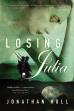
LOSING JULIA

Jonathan Hull

BIO

Jonathan Hull is the author of LOSING JULIA, a Booksense 76 Selection and bestseller, a San Francisco Chronicle bestseller, and a Denver Rocky Mountain News bestseller. An award-winning journalist, he spent several years as Time magazine's Chicago and Jerusalem bureau chief before turning to writing fiction. The father of two children, he lives in Marin County, California with his wife Judy.


AUTHOR TALK

October 2003

In this interview, award-winning journalist and bestselling author Jonathan Hull discusses the inspiration for his latest novel THE DISTANCE FROM NORMANDY. He also talks about the parallels between this work and his debut novel LOSING JULIA and provides an impressive list of some of his all-time favorite books.

Q: How did you come up with the idea for THE DISTANCE FROM NORMANDY?

JH: The book essentially sprung from a single inspiration: namely, that it might be interesting to take two of the more strikingly dissimilar members of the American family --- an upright and aging World War Two vet and a drawer-drooping, despair-filled teenager --- lock them in the same room and let them at each other. As the narrative took hold I realized I could bring together several subjects of interest: the experience and moral consequences of war; the sometimes lethal disaffection among today's youth, which at its worst has led to almost incomprehensible tragedies in our schools; and the unique and often intense affinity between grandparents and their grandchildren. Also, it seemed to me that our near-exhaustive efforts to adequately eulogize America's so-called "greatest generation" beg a crucial question; namely, how far from greatness have we since fallen? Put another way --- and this explains in part how I came up with the title --- how might one measure the distance from Normandy?

In creating the character of Mead, I wanted a front-line witness to some of his generation's greatest trials --- D-Day, the Battle of the Bulge, the final conquest of Germany --- only with a burden of guilt, complicating the notions of good and evil. For his grandson Andrew, I relied on a combination of my own memories of teenage turmoil --- admittedly dated --- as well as my experiences reporting on the topic of youth violence, which I'd covered extensively.

Q: How long did it take you to write?

JH: Less than nine months start to finish, which is quick for me. By comparison, LOSING JULIA took me over two years and I spent another two years on a manuscript that didn't go anywhere. Hopefully I'm learning. Or maybe I just got lucky.

Q: THE DISTANCE FROM NORMANDY and LOSING JULIA both dwell on the issue of loss. Would you consider this one of your central themes as a writer?

JH: And as a reader and husband and father and son as well. It seems to me that dealing with loss is the single greatest challenge we each face, whether it be lost youth or lost love or lost opportunity or what have you. So the great question becomes: how do we fully embrace life while at the same time preparing to one day let go of everything we hold dear, often under the most difficult and painful circumstances? I'm still working on the answer, but I'm convinced it involves a robust sense of humor.

I think this also explains why I'm so drawn to history, both as a reader and a writer. Somehow it strengthens me to feel a part of a much larger human struggle to make some sense of our place in the universe; to know that millions of others who have gone before have asked the same unanswerable questions as they stared in awe at the night sky. And it inspires me to see how others have managed to find meaning and dignity in their lives even under the most terrible conditions, reminding me of just how fortunate I am.

Q: In LOSING JULIA, Patrick Delaney faces enormous hardships both as a young soldier in the trenches of World War One and later as an older man. Do you believe he is ultimately defeated by those hardships?

JH: I leave that to the reader, but I'll certainly say he's been around the block a few times. Some readers have found his story quite uplifting and often humorous while others have closed the book with a sense of unremitting tragedy. I suppose that says as much about people as it does about the novel.

Q: Both of your books are set against the backdrop of war. Why does the battlefield attract you as a writer?

JH: Probably for many of the same reasons that it repels me so much. No other human experience so fully and graphically reveals the very worst --- and yet also the very best --- in us. Good and evil, love and death, courage and cowardice, faith and despair; it's all right there. And I think it's impossible to understand how we got where we are today without some appreciation of the two greatest cataclysms in modern history, which I believe still haunt us to this day --- and rightly so. As a writer I think it's vitally important that we confront and examine and mourn our enormous capacity for violence and evil. That said, I cringe at the glorification of violence, so frequent in our media, where brutality and suffering take on an almost pornographic quality.

Q: How did you go about your research?

JH: I've always had an interest in military history, partly inherited from my father, who was something of a Revolutionary War scholar. Yet after my years as a reporter I made a deliberate decision not to go out and interview vets because I wanted to find the material in my imagination rather than my notebooks. Still, I was obviously concerned with getting the facts and atmosphere right and I read a great many diaries and letters and memoirs from soldiers of both wars.

During my research for LOSING JULIA I visited the battlefields of Verdun and the Somme, certainly two of the loneliest, most wretched places on earth, the landscape still violently churned like a stormy sea. I returned to France to gather material for THE DISTANCE FROM NORMANDY, this time seeking the sad harvest of a different generation. More than once as I walked among old bunkers and cemeteries it struck me that the combatants of the Second World War could literally take cover behind the innumerable headstones of their fathers who had fallen in the previous war. In some cases, the monuments and memorials to the Great War actually bear the scars of bullets and artillery shells fired in the Second World War, a desecration that makes those memorials --- and the sacrifices of those they honor --- all the sadder still.

Q: You obviously have no firsthand experience with either old age or the wars you write about. Did that make the writing more challenging?

JH: Perhaps, but in some ways I think it made it more refreshing as well. I've never subscribed to the writing school mantra write what you know. I think that puts writers on far too short a leash. What's the imagination for if we're all just going to rehash our childhoods, careers and marital traumas? I think I'd rather tell a young writer to write about any subject that profoundly moves and fascinates you, whether or not it's part of your personal experience. You have to be possessed by the subject matter to finish a book, and if the writer isn't possessed the reader sure won't be.

Q: Did you find the transition from journalist to novelist difficult?

JH: Though I'd heard many cautionary accounts, I found the switch both painless and pleasurable. After years of being constrained by facts, quotes and the accessibility of sources, it was wonderfully liberating to toss aside my reporter's notebooks and plunge right into other people's hearts and heads, which of course is where all the really interesting stuff lies hidden. Fiction strikes me as far better equipped to get at the deeper and more compelling truths of our lives --- our unspoken fears and hopes, our secret desires. I enjoy writing fiction for the same reason that I enjoying reading it: it's the best way I know of to experience the world through the eyes of others.

And best of all, I get to spend a lot more time with my family.

Q: What are your writing habits?

JH: Five or six hours a day, if I'm lucky. I write in a windowless room, accompanied by my dog and fortified by a constant stream of music, usually classical or acoustic with some soundtracks and a bit of bracing rock thrown in here and there. While much is made of creativity's exhausting toll, I can't wait to get to my keyboard each morning. A real nine-to-five job, now that's agony.

Q: You have now written books with backdrops of both World War I and World War II. You spent three years as Time's Jerusalem bureau chief, covering Arab-Israeli affairs, the Palestinian uprising and the Gulf War. Can readers expect you to write a novel set in that part of the world?

JH: When I left Jerusalem I thought that the last thing the world needed was another book on the Arab-Israeli conflict as it seems that just about every journalist who has so much as a brief layover at Ben Gurion Airport feels compelled to write about their experiences. But it's tempting for very obvious reasons: few conflicts so purely and dramatically and tragically demonstrate the elemental human capacity for divisiveness, with good-hearted people on both sides. We'll see.

Q: What are you working on now, and when can readers expect to see it?

JH: At the moment I'm well into another novel set against the backdrop of World War Two --- I'm not done with that conflict yet --- only this time from a woman's point of view and set partly in Italy. After writing about veterans in my two previous novels I decided it's time to write about a veteran's wife. But it's much less a war novel than a love story, and maybe even two love stories. I'm in the middle of it right now so I feel a bit like a tunneling gopher who is not quite sure where he'll pop up. As for just when I'll be finished, well, I've learned better than to make predictions as I always seem to be wrong. But if the process is at times slower than I'd like, I'm at least heartened by the knowledge that very few of my favorite books were written in record-breaking time.

Q: What are some of your all-time favorite books?

JH: In no particular order I'd have to include:
THE BROTHERS KARAMAZOV, Fyodor Dostoyevsky
THE HEART OF THE MATTER, Graham Greene
FATHERS AND SONS, Ivan Turgenev
FOR WHOM THE BELL TOLLS, Ernest Hemingway
LOLITA, Vladimir Nabokov
THE COMPLETE MEMOIRS OF GEORGE SHERSTON, Siegfried Sassoon
ALL QUIET ON THE WESTERN FRONT, Erich Maria Remarque
THE DENIAL OF DEATH, Ernest Becker
GOODBYE TO ALL THAT, Robert Graves
SOPHIE'S CHOICE, William Styron
DEMIAN, Hermann Hesse
MAN'S SEARCH FOR MEANING, Viktor Frankl

© Copyright 2003, Jonathan Hull. All rights reserved.

Back to top.   


PAST INTERVIEW

Jonathan Hull spent 10 years working as the Jerusalem Bureau Chief for Time magazine. Perhaps that explains his deft evocation of the tragedies of war and emotional loss in LOSING JULIA, his debut novel. Recently our Founder and President, Carol Fitzgerald, got a chance to ask some questions of the man whose words many find to be so enthralling.

BRC: You paint such a sad, lonely and depressing picture of old age. For instance, Patrick's feeling that his son is just calling because he's thinking about him dying: "Old people can sense that, when friends and relatives are calling just to hear a voice that will soon be extinguished or visiting to take one last look because they've got a premonition." What was your source of inspiration about how older people feel? Do you fear old age the way you describe it?

JH: I can’t say I’m looking forward to it. Yet if my portrait of old age seems a bit, how shall we say, disquieting, I don’t mean to suggest that life’s final stage can’t be filled with dignity and purpose. So much depends on the state of one’s health, resources and --- perhaps most importantly --- whether the accumulated past is a source of pride and contentment or bitterness and remorse. Ultimately what I fear more than old age itself is an old age haunted by regrets, which gets back to the central theme of the book and in part explains what motivated me to try writing a novel in the first place.

I didn’t have any particular role model for Patrick but I have spent some time in nursing homes and I don’t think it takes great powers of observation to get the general idea; namely, that there are a lot of other places that most of us would rather hang our hats. Still, I tried to demonstrate that humor remains a formidable defense even in our darkest moments.

BRC: Did you envision this story as a whole in your mind before you wrote it, or did it evolve little by little, with each chapter bringing a new, unforeseen twist?

JH: The first challenge for me was to bring Patrick fully to life because I’m much more concerned with character and atmosphere than plot, and I think that if the main character is vivid and hearty enough, the plot will in some ways take care of itself. Once I began writing I had a general idea of where I was going, of where the conflict would lie, but most of the scenes evolved as I went, often to my surprise and bemusement. I’ve never had much luck outlining in advance because I never quite know what I want to write until I start writing. I liken it to a miner trying through sheer intuition to follow a vein, leaving a considerable pile of broken picks in his wake as he tunnels frantically this way and that.

BRC: Do you think that Patrick and Julia really loved each other, or were they just attracted to each other because of their love for Daniel? Do you think that any person has the capacity to complete another?

JH: I’d prefer to leave it to the reader to judge the depth of Patrick and Julia's relationship. Certainly I tried to show that they were both deeply vulnerable when they met, and also shared the necessary raw chemistry. But to those who find Julia somewhat idealized and thinly drawn I say, of course! Patrick only had a few days with her and we can only know her as a sort of projection of his most treasured memories; memories he is revisiting decades later. Thus he, himself, questions who is better off: those who share love long enough to see which parts inevitably fade or those who lose their love when it is still pristine.

Can one person complete another? When it comes to relationships, I don't think we have a lot to offer unless we are reasonably whole to start. That said, I certainly don’t want to go it alone. I guess I’d put it this way: without each other we are surely lost and even together it’s touch and go at times.

BRC: You developed little dialogue between Julia and Patrick. Was it your intent to force the reader to imagine the love between them based on their shared experiences?

JH: I ascribed to the theory that less is more, believing that readers know from personal experience how quickly and inexplicably we can fall for others, leaving words to play catch-up as we find ourselves like two ships hopelessly entangled in grappling hooks.

BRC: Without giving the ending away, did you debate closing the book the way you did?

JH: Yes, but I settled on it rather quickly because to me it’s where the whole story starts. I conceptualized the book by working backward from the ending.

BRC: There are quotes that punctuate the entire book --- some reflecting the thoughts of soldiers and some just words of wisdom and poignancy. How did your decision to use this particular stylistic device evolve?

JH: I spent months reading letters and diaries of soldiers and I quickly realized that nothing I could write could approach the searing poignancy and bitterness of their words. By sprinkling excerpts throughout the book I hoped to borrow some of their power and immediacy to further anchor the story in the incomprehensibly tragic reality of that era.

BRC: LOSING JULIA has so many beautiful lines, but one of my favorites is: "I see the moon, the moon sees me, the moon sees somebody I'd like to see...God bless the moon and God bless me and God bless somebody I'd like to see." From where did this passage originate?

JH: When I was a child visiting my grandmother she used to sing this to me at night. I believe it’s an old lullaby, the origins of which I’m unaware.

BRC: Your descriptions of World War I and its battles were so well detailed. How did you conduct your research? What made you choose this as your setting for the beginning of the story? Is this a favorite period in history for you?

JH: Again, I did a great deal of reading and I’ve been to places like Verdun and the Somme, but I consciously chose not to go out and interview 100-year-old veterans because I didn’t want to fall back on my journalistic habit of telling other people’s stories.

I’ve long been fascinated by the First World War because I think that in many ways our contemporary sense of alienation and estrangement traces back to what happened then, when the unprecedented horrors of trench warfare made a mockery out of longstanding and vital assumptions that people had about faith and human nature and the benevolence of technology and the inevitability of progress. Never had so many people been faced with the tragic absurdity of humanity; the specter that evolution could come to such a horrific dead end in which some 6,000 men were being slaughtered each day, month after month, year after year. While much attention is rightly paid to the Second World War, I don’t think it can be properly understood without looking back at the seismic changes wrought by the previous war, which set the tone for the entire century. Tragically, the Second World War was really a continuation of unfinished business.

BRC: You have been a journalist for years winning a number of awards. Was the transition from fact to fiction a difficult one? Did your years in Jerusalem, surrounded by the threat of war, help influence your decision to write this book?

JH: Actually, the transition felt quite liberating because I think it’s so much easier to get at the truth with fiction than nonfiction. With fiction you can say and reveal things that we dare not in our day to day lives, and you can step inside other people’s heads, which is where all the good stuff is hidden. As a journalist I could only describe what people said or did, not what they really felt or thought.

The three years I spent covering the Arab-Israeli conflict has inevitably colored my writing, reminding me of how easily we --- and I mean all of us --- can slip from civility to brutality in the right conditions. It’s difficult to come away from Jerusalem without a considerable wariness about human nature, as well as a profound sadness at how quickly and irrevocably we can turn against each other.

BRC: Your writing is full of imagery and I dog-eared more pages in this book than I have in any other in a very long time. How long did it take you to write LOSING JULIA? Which theme did you decide to explore first --- old age remembrances, the war, or the romance?

JH: It took about two and half years, though I can never break down how much time I actually spend writing and how much I idle away staring blankly at my computer screen or rearranging my desk.

I knew from the start that I wanted to write a love story but I wanted it to be part of a larger story of a man looking back and taking the measure of his life --- a sort of meditation on love and loss. I chose to set the book against the backdrop of both war and old age because they raise some of life’s most difficult questions, for example, how to retain a sense of hope and resiliency in the face of seemingly hopeless conditions.

BRC: Have any particular author(s) influenced your writing and thinking? Are there any contemporary novels that you have read recently that you felt were outstanding?

JH: There are so many, but I’d certainly list Hermann Hesse, Erich Maria Remarque, Graham Greene, Virginia Woolf, Hemingway, John Cheever and Dostoyevsky. Most of the books I read seem to be by dead authors because I have so much catching up to do, but I’ve recently enjoyed --- and some of these aren’t all that recent --- THE POISONWOOD BIBLE, THE THINGS THEY CARRIED, WRITTEN ON THE BODY and PLAINSONG.

BRC: Are there any plans to turn LOSING JULIA into a film? What do you think about the whole book-to-movie trend?

JH: Nothing firm. While I certainly wouldn’t mind the money I didn’t write LOSING JULIA with any big expectation of selling film rights. To my mind, the story I had to tell is best told with words, and when I’m asked who I see playing this or that part I sort of shrug because I don’t see anybody but the characters themselves. Movies, of course, have their own strengths and beauty and magic but rarely are they more than a pale reflection of the books they are based on, simply because literature is capable of so much more depth and nuance. As for the book-to-movie trend, I think it’s great in so much as it has given some writers the financial freedom to keep writing and regrettable to the extent that writers may be tempted to produce cinematic books. I believe it was Hemingway who recommended that the best course of action for the writer is to stand on the Nevada border, wait for Hollywood to toss the money across, and then throw the manuscript and run for it.

BRC: Do you have any new projects you're working on now?

JH: I’m well into a second novel, which is refreshingly free of nursing homes and trenches. While I’m enjoying writing in a contemporary voice, I’d like to immerse myself in another historically-based book in the future.

Back to top.   

© Copyright 1996-2008, Bookreporter.com. All rights reserved.


Home - Reviews - Features - Authors - Daily Quote - Books to Movies - Book Clubs - Awards - Coming Soon
Search - Contests - Word of Mouth - Bestsellers - New in Paperback - Newsletter - Author Bibliographies - Blog
For Librarians - Submitting a Book - Become a Reviewer - FAQ - Contact Us - About Us - Privacy Policy

© Copyright 1996-2008, Bookreporter.com. All rights reserved.
The Book Report, Inc. • 250 West 57th Street • Suite 1228 • New York, NY • 10107

Bookreporter.comReadingGroupGuides.comAuthorsOnTheWeb.comAuthorYellowPages.com
Teenreads.comKidsreads.comFaithfulReader.com