IndieBound Independent Bookstores BRC Facebook Fan Page
Coming Soon Page
Bookreporter.com
Click Here For Librarians Submitting a Book Become a Reviewer FAQ Contact Us About Us
Home Reviews Features Authors Quote Books Into Movies Book Clubs Awards Coming Soon
Search Contests WOM Bestsellers New in Paperback Newsletter Bibliographies Blog


Books by
Elizabeth Noble


THE GIRL NEXT DOOR

THINGS I WANT MY DAUGHTERS TO KNOW

THE FRIENDSHIP TEST

Elizabeth Noble Feature

Elizabeth Noble

BIO

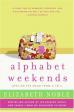
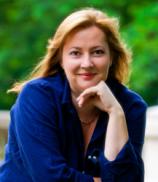
Elizabeth Noble is the author of the internationally bestselling novels THE READING GROUP, THE FRIENDSHIP TEST, ALPHABET WEEKENDS, and THINGS I WANT MY DAUGHTER TO KNOW. Her newest book, THE GIRL NEXT DOOR, is out in the UK and will release in the US on December 22, 2009. She lives with her husband and their two daughters in New York City.

Back to top.   


AUTHOR TALK

December 18, 2009

In this interview, Elizabeth Noble --- author of THE READING GROUP, THE FRIENDSHIP TEST, ALPHABET WEEKENDS and THINGS I WANT MY DAUGHTERS TO KNOW --- compares her own experiences of moving to New York City with those of Eve, the protagonist of her newly released THE GIRL NEXT DOOR, and explains how much of her own life and personality went into creating that character. She also reflects on how her writing style and abilities have evolved over the course of her five novels, shares some of her current reads, and discusses the two upcoming books she's working on.

Question: Have you always wanted to be a writer? Do you come from a family with artistic ambitions?

Elizabeth Noble:
I desperately wanted to be a lawyer when I was young. A British barrister. I always wrote, though --- short stories and poetry. I typed my first novella on a children’s typewriter I got for Christmas, during the summer holidays when I was about 12. I’d have made a lousy lawyer, I suspect, and by the time I went to University in 1987 I’d changed my mind, and studied English Literature. As an adult, though, THE READING GROUP, my first novel, was absolutely the first thing I’d written. I’m the only writer in the family --- my brother is a teacher, and my sister is a midwife; dad was a banker, and mum a nurse. I’m lucky in that it’s a family where everyone’s dreams and ambitions are supported and celebrated equally.

Q: Like Eve, you also moved to New York City from England --- tell us about your experience being new to the city. What advice would you give Eve? How similar are Eve’s experiences to your own?

EN:
When I first came to New York, I fell in love with the sights, sounds and speed of the city. Then the honeymoon ended, and I became exhausted by trying to keep up with everything. I found it hard to make friends, and felt awkward and lonely, just like Eve. I’d never presume to give her advice. What worked for me was remembering who I was, caring less about pleasing everyone else, and getting on with having a fantastic adventure in this incredible city…eventually, things slot into place. I’ll always be English, and I’ll go home eventually, but while I’m here, I’m going to make the most of it!

Q: How much of an influence does your own life have in your writing? Were any of the characters inspired by your friends or neighbors? Which character in THE GIRL NEXT DOOR do you relate to the most, or find yourself most similar to?

EN:
I imagine it is pretty obvious that Eve is the character in THE GIRL NEXT DOOR I most relate to. Many of Eve’s feelings of loneliness and alienation, and just generally feeling all wrong in her new home, came directly from my own process of adjusting. But I’m a little bit Charlotte, too, in some respects, and I’d love to be a venerable, wise older lady like Violet.

Q: Your earlier book, THINGS I WANT MY DAUGHTERS TO KNOW, uses letters to provide structure. How did the idea of an apartment building help you to structure this novel?

EN:
Having an apartment building at the core of THE GIRL NEXT DOOR is helpful in that it provides a reason for all these disparate characters to meet and interact, just like real life does. This is the first time I’ve had a place almost be a character in a novel. Structure is vital in a novel --- it’s a little like having a recipe to follow in a kitchen, and, for me, it helps keep me focused and my story tight.

Q: This is your fifth book. How have you developed as a writer since you first started out? Do you feel that your work has changed significantly, or developed in a different direction than you may have originally intended?

EN:
I hope so! I think I have more confidence in my own voice and faith in my abilities (although there are always dreadful patches of self doubt and loathing during the writing process!). One change I have tried hard to instigate is my early tendency to resolve too neatly, and a slight compulsion to happy endings. Life is messier than that, and I have tried to make my conclusions a little less tidy to reflect that.

Q: Which of your books gave you the greatest trouble to write? And which gave the greatest pleasure or pride?

EN:
THE READING GROUP was the hardest --- you’ve no confidence, no real idea of what you’re doing, because it’s the first one. I had sold it to my UK publisher on the strength of 50 pages, and the next 550 came hard. ALPHABET WEEKENDS was undoubtedly the most fun to write --- the pleasure in constructing a love story when you essentially knew the outcome very early on, but just wanting to revel in the journey, was immense. I am inordinately proud of THINGS I WANT MY DAUGHTERS TO KNOW, possibly because it is the most personal to me. I am probably always most obsessed, though, with whichever novel I am currently writing.

Q: How do you work? Do you put ideas down immediately or do you walk around with them for a while, letting them incubate? Who reads your writing first? Do you have any superstitions about writing?

EN:
My editor is always the first person to read a new book, and I’m notoriously unwilling to share anything at all until I’m finished. I write in a frustratingly disjointed way, and tinker all the way through, adding bits to the middle long after I’m happy with the ending, so I only really want someone to read the end result. This requires trust by the spadeful from anyone who edits me. I’m not remotely superstitious about it, and as a working mother with two young daughters, I can’t afford to have too many rituals or pretensions either...!

Q: Who are your literary influences and what are you reading right now?

EN:
By my bed right now, I have Penny Vincenzi’s new novel, THE BEST OF TIMES. Penny is a friend --- we met on a book tour about five years ago --- and I love her stories; THE GUERNSEY LITERARY AND POTATO PEEL PIE SOCIETY, because everyone is raving about it; Candace Bushnell’s ONE FIFTH AVENUE, because I wanted to see how she wrote New York, and Michael Connolly’s THE SCARECROW, because he’s so darn good! I read mostly fiction, but across the whole spectrum, and I usually have two or three books on the go at the same time. I’m not sure about literary influences, but I adore Anita Shreve and Armistead Maupin.

Q: Are you working on anything new? Will any of the characters from THE GIRL NEXT DOOR make an appearance in an upcoming novel?

EN:
I am working on two new novels (a first for me --- it is interesting to switch from one to the other...!) The first is a love story set back in the UK. The second is a sequel to THE GIRL NEXT DOOR, in which several characters are reprised, most particularly Rachael and Charlotte....

© Copyright 2009, Elizabeth Noble. All rights reserved.


Click here now to buy this book from Amazon.

Back to top.   


INTERVIEW

April 11, 2008

Elizabeth Noble is the bestselling author of THE READING GROUP, THE FRIENDSHIP TEST, ALPHABET WEEKENDS and the newly released THINGS I WANT MY DAUGHTERS TO KNOW. In this interview with Bookreporter.com's Kathy Weissman, Noble discusses what inspired her latest novel --- which she describes as a love letter to her children --- and explains which elements from her own life and how those close to her fueled the plot of her story. She also gives insight into how her characters are formed, shares her thoughts on ideas of feminism in today's society and reveals details about her next writing project.

Bookreporter.com: THINGS I WANT MY DAUGHTERS TO KNOW is a great title that any mother would identify with, expressing our desire to pass on whatever wisdom we can (and spare our kids our mistakes!). You have two daughters. How is this book inspired by your hopes or fears for them?

Elizabeth Noble: Of all my novels, this is the one that comes most from my heart. It was easy enough for me to imagine myself and my daughters in the situations my characters faced, and I admit that I sobbed over the computer more than once while I wrote it. The relationship between a mother and her daughter is one of the most complex and strongest that you have in your life. It was a joy to explore it. My last book, ALPHABET WEEKENDS, was a romantic love story, so I wanted to take a change in direction.

BRC: Is this novel at all autobiographical in the sense of having survived the death or illness of someone close to you? Why did you choose to focus on that?

EN: I am ridiculously lucky (typing while touching wood) --- death and serious illness haven’t come too near to me, so the novel isn’t really autobiographical in that sense. My mother lost her own mother to breast cancer when she was only 24, though, and that loss definitely resonated with me as a child and as and adult, and very much informed my mum’s parenting. And I have friends who have been through similar experiences, who were generous enough to share their stories and emotions with me, which was tremendously helpful.

BRC: Do you have sisters? How did that background affect how you portray the four sisters in THINGS I WANT MY DAUGHTERS TO KNOW?

EN: I have one sister --- Kate. She’s 18 months older than I am. We’re very different, in almost every way (same nose, though!), and fought a lot as children. We grew apart as young adults (she was a nurse and I thought she was dull and staid, I was a student and she thought I was lazy and wacky), and have found much more common ground as mothers, and in our late 30s (she isn’t dull at all. Okay, I may still be lacking in discipline). We’re the classic case of sisters who have always loved each other and “been there” when it counts, though. I definitely used that element of our relationship when I created the characters of Lisa, Jennifer, Amanda and Hannah --- they’re all very different and drive each other crazy, but the ties between them are strong, and they find that out when they lose their mother.

BRC: How did you come up with Barbara’s journal as a connective device? Do you keep a journal, and if so, is it something you hope your daughters will read eventually, or is it purely private?

EN: I don’t keep a journal. I never have. See earlier remarks about lack of discipline. But I think I’m lucky that my novels will exist --- my daughters, and their children, will be able to see lots of me in the pages of them. Particularly this one. It’s a love letter to them. A journal was an essential tool when trying to literally bring to life, on the pages, a lead character who has died before the novel opens. I needed to make her vivid and real, and the diary was the perfect way to do that. It enabled Barbara to define herself rather than rely on the recollections of others.

BRC: This novel focuses on “blended” families. Why is this an important theme for you?

EN: I belong to one! I have a stepson, William. We met when he was 13, and I’m closer in age to him than to his father. That has made for interesting times. Instant teenager! When I was in my 20s, I sometimes resented him --- I was probably jealous, on some level. I wanted my new boyfriend all to myself. The minute I had my own baby, I “got” how his father felt about him, and that changed everything. Now, 14 years on, it’s great. He has little sisters, they have a big brother to idolize, and we really enjoy the time we get to spend together. Modern, blended families are definitely more complicated, which makes them rich veins for a novelist.

BRC: Although THINGS I WANT MY DAUGHTERS TO KNOW is by no means a doleful book, it does follow, month by month, nearly a year of mourning. You give a rich sense of the various ways people grieve. Could you comment on what you wanted to convey by structuring the book this way?

EN: The novel opens with Barbara’s funeral, but then I largely leave the family alone to grieve for six months, with the real action of the story starting the following Christmas. I think people who have suffered that sort of loss do put their lives on hold for a time --- necessarily. So I didn’t want to start throwing new events and twists at them until they’d had some time to just cry and feel sorry for themselves, and concentrate on getting through the days.

BRC: It’s nice to read a book in which the mother is charming, creative, sensible, loving and high-spirited --- and not perfect. When and how do you think children become more realistic about their parents --- knowing they’re flawed but still loving them?

EN: Seeing your parents as real, flawed people is, to me, one of the real definers of adulthood. It’s a bit of a roller coaster --- it can be discombobulating at first to have these idols taken off their pedestals --- but eventually your relationship can be much richer.

BRC: There’s a big emphasis on friendship in your novel THE FRIENDSHIP TEST, and even ALPHABET WEEKENDS is built around a male/female friendship that evolves into a romance. Why is this your focus? What has it meant in your own life?

EN: I think I have two strong focuses running through my fiction --- familial ties and friendships. Who can cope without one or the other? The really lucky ones amongst us have both.

BRC: Do you consider yourself a feminist? If so, how would you define your approach to women’s lives, rights, sensibilities?

EN: “Feminist” is such a complex term. I was born in the late ’60s, and had the benefit of a great education and a career in a female-dominated profession (publishing) where the glass ceiling was smashed a couple decades ago, so I have never personally needed to be militant about my gender. I think now is a great time to be a woman. We have choices, but the crushing pressure to “have it all” is possibly behind us. I know more and more women who are at peace with their decision, either to work outside the home, but with a proper support network behind them, or to step away from the career track and be at home with their children when they are small. That said, motherhood = guilt!

BRC: You’ve lived in the UK and the US. How has this dual-country life influenced and enriched your fiction?

EN: I lived in Canada and Australia for periods of time while I was a child, so I know what a wonderful opportunity it is for kids to expose them to different cultures and experiences. We’re having a ball in the US, although we miss friends and family in the UK very much. All life is copy, don’t they say?

BRC: It’s charming and a little ironic that your first novel, THE READING GROUP, was both about a book group and presumably taken up by them. What do you think of reading groups, and are you now or have you ever been in one?

EN: I love reading groups! I have belonged to one in England for years --- its members are amongst my dearest friends, and I still “go” once a month, if I can, via the magic of the Internet and Skype. I have recently joined one in New York, full of great women, but reading groups are a little like shoes --- they take a little wearing in before they’re comfortable.

BRC: Each one of your novels has shifting points of view, sometimes a lot of them. How do you juggle these? Do you actually chart them out? How do you make sure the different voices are distinct?

EN: I live and breathe a novel while I’m writing it, so the characters become very real to me. Sounds weird, I know, and maybe a little pretentious, but trust me, it’s a good thing. I know what they look like, how they dress, what music is on their iPod...I have notes about that. They kind of germinate into people who live in my head. And yes, I talk to myself in Central Park. Who doesn’t?! Then it’s easy to know who is “speaking” and what they’d say in any given situation. It’s the best feeling when you sit down at the screen and they all pour out.

BRC: How important is a sense of humor to you --- in life and in your writing?

EN: Essential. I like to laugh. And when I write, I definitely see the need for “light relief” in heavy storylines.

BRC: What are you working on now, and when might readers expect to see it?

EN: My fifth novel. And, hopefully, sometime in 2009. This one is the story of several relationships (romantic and otherwise!) happening in an apartment building somewhere on the Upper West Side.


Click here now to buy this book from Amazon.

© Copyright 1996-2010, Bookreporter.com. All rights reserved.

Back to top.