|
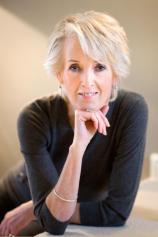
Joanna Trollope
BIO
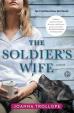
Joanna Trollope is the author of eagerly awaited and sparklingly readable novels often centred around the domestic dramas of life in contemporary England. Her latest novel, Brother & Sister, explores adoption. Her last novel, Girl from the South, explored the thirty something generation. She is also the author of a number of historical novels and of Britannia’s Daughters, a study of women in the British Empire. Her novels have been translated into over twenty languages and several have been adapted by the BBC and Masterpiece Theatre. Joanna Trollope also writes under the pseudonym of Caroline Harvey.
Joanna Trollope was born in 1943. She taught for twelve years and worked for the Foreign Office before becoming a full-time writer.
INTERVIEW
April, 1999
BRC writer Jami Edwards eagerly undertook the task of reading Joanna Trollope's novel, OTHER PEOPLE'S CHILDREN, and rereading many of her past books. In this interview, you'll discover...why they call Joanna Trollope the "Queen of Aga," and what she thinks of that title, if her ancestor author Anthony Trollope has had any influence on her career, and why she felt propelled to write about stepfamilies in her new book. Don't miss this engaging interview from the talented and prolific British author who writes tales about families in duress with a careful and astute hand.
BRC: You've been called the "Queen of the Aga saga." Please explain to our American audience what that means.
JT: An "Aga" is a Swedish invention --- a permanently burning, cooking/heating stove and a sort of symbol of country life. So a rather patronizing (and inaccurate!) tag for me --- needless to say, coined by a metropolitan man!
BRC: What led to your focus on stepfamilies in OTHER PEOPLE'S CHILDREN?
JT: Two things: a lifelong fascination dating from reading fairy stories as a child with stepmothers --- why are they always supposed to be "wicked"? And the UK statistic that by the year 2010, there will be more stepfamilies than birth families --- so a big modern area of potential problem (sad for life, excellent for fiction!).
BRC: As with your other books, OTHER PEOPLE'S CHILDREN is not set in a metropolis. Why do you set your books in villages rather than cities?
JT: I don't always set them in villages --- more often in towns. But always in smallish communities because the characters' actions are more visible there, and the dramatic tension is heightened.
BRC: Although your books are set mainly within the small world of English villages, they have been translated into over 20 languages. What do you think makes your books so universal to readers worldwide?
JT: The joys and woes of the human heart and the dilemmas of the human condition are universal. Actually, I think the language total is about 28 now --- just added Korean and Taiwan Chinese!
BRC: Tell us about your own childhood in England and which of your books it most resembles.
JT: My childhood is not in any of these novels --- I am writing about contemporary life, not life in the '40s and '50s!
BRC: You are an ancestor of the 19th century novelist Anthony Trollope. What impact has his writing had on your work? Do you ever feel that you have a particular burden --- or asset --- that comes with bearing his name?
JT: Oddly my name has been no professional help at all! It seems to have made no difference...I admire him hugely, both for his benevolence and his enormous psychological perception.
BRC: What contemporary authors do you read for pleasure and what was the last great book you read?
JT: I read fiction avidly --- I usually have a nineteenth century novel (the golden age of fiction) on the go, but love Anne Tyler, Carol Shields, Richard Ford, Barbara Kingsolver among many others. The last truly remarkable novel I read was Louis de Bernieres' CORELLI'S MANDOLIN, and ANGELA'S ASHES, the biography by Frank McCourt (after vowing I'd never read another Irish memoir as long as I lived...)
BRC: Tell us about your typical writing day.
JT: Very disciplined and pretty dull. Up at 7 AM, breakfast, dog walk, laundry, work 9-2 PM without pause, then correspondence and business mail (huge), more walking, phone calls, grocery shopping, friends if there's time (and energy) early bed... BRC: You have a unique way of diving into your characters' lives. Tell us about some of your research techniques with past books and what particular research you did for OTHER PEOPLE'S CHILDREN.
JT: I simply talk to people and get them to describe to me their feelings or their work --- whichever I'm after. I talked to 8-10 stepfamilies for this novel --- I've never interviewed people who wanted/needed to talk so much.
BRC: What was the catalyst for your transition from teacher to writer?
JT: Instinctive. I ran both for a while, teaching by day and working by night, but gradually focusing on the latter as my "natural" home...
BRC: Tell us about your alter-ego, Caroline Harvey, and how you came to write under two names.
JT: Caroline Harvey writes romantic period fiction, Joanna Trollope contemporary realistic fiction. Harvey is my two Trollope grandparents' first names put together. She started for purely practical reasons --- I needed the money to put my elder daughter through law school.
BRC: Some authors claim they don't know what their characters will do. Others assert that nothing happens in a book that has not been planned by the author. What are your views?
JT: I plot the first 5 or 6 chapters quite minutely, and also the end. So I know where I am going but not how I'm going to get there, which gives characters the chance to develop organically, as happens in real life as you get to know a person.
BRC: What differences have you experienced between the American publishing/publicity experience and the British one?
JT: I've experienced huge kindness here --- a great welcome and some very generous reviews without the snide social edge I often suffer from at home. I'm not patronized here either, which I much appreciate!
BRC: What do you see as the most common pitfalls in contemporary fiction and what do you do to keep from falling into those traps yourself?
JT: Proximity and self-indulgence --- I wonder if it's the word processor? I'm a chronic self-disiplinarian when working, and firmly believe that fewer well chosen words mean more satisfying meaning for the reader.
BRC: What was your involvement in the television adaptations of THE CHOIR and THE RECTOR'S WIFE and how have those experiences left you feeling about the medium of television in general?
JT: Better with THE RECTOR'S WIFE than THE CHOIR and I think it showed! All TV can do is capture the spirit of a book because the medium is so utterly different. But I'm very grateful for the readers that Masterpiece Theatre has undoubtedly brought me.
BRC: Your novels are certainly more character-driven than description dependent, but one thing of note in all of them is "hearth and home" --- whether it's the joy taken in one's surroundings, as with Elizabeth Brown in OTHER PEOPLE'S CHILDREN, or the lack of joy, as with Nadine in the same novel or Anna in THE RECTOR'S WIFE. What makes "hearth" so important to you and has that importance been affected by your writing or vice versa?
JT: It's not so much hearth as family life which is where we all, I'm sure, learn (or fail to learn!) all our life skills for the future.
BRC: What advice would you give to aspiring writers?
JT: Patience, persistence and train your powers of observation. You can't be too old to be a writer, but you can definitely be too young!
BRC: What writers have particularly inspired you?
JT: Trollope, Eliot, Jane Austen, to name but a few...
BRC: What are you reading now and what have you recently read?
JT: I'm reading Annie Proulx's CLOSE RANGE (powerful stuff!), and I've just reread MANSFIELD PARK (brilliant on bitchy women...)
BRC: Do you already have thoughts about your next project? Can you tell us a little bit about it?
JT: I'm a third done into a new book but sorry --- I have a superstition about talking about it!
BRC: What do you see as a writer's responsibilities to her own community?
JT: Truth (as she sees it), integrity and comparison.
BRC: What are your thoughts on the millennium?
JT: I shall be glad when it's over --- we're treating it with such tawdry secularity in the UK. I shall spend the evening of December 31st, happily baby-sitting my granddaughter and wouldn't be anywhere else!
Click here now to buy this book from Amazon.com.
© Copyright 1996-2008, Bookreporter.com. All rights reserved.
Back to top.
|